
PlagiarismRemover.AI Review: The Best Tool to Remove Plagiarism
By: PlagiarismRemover.AI
At a glance
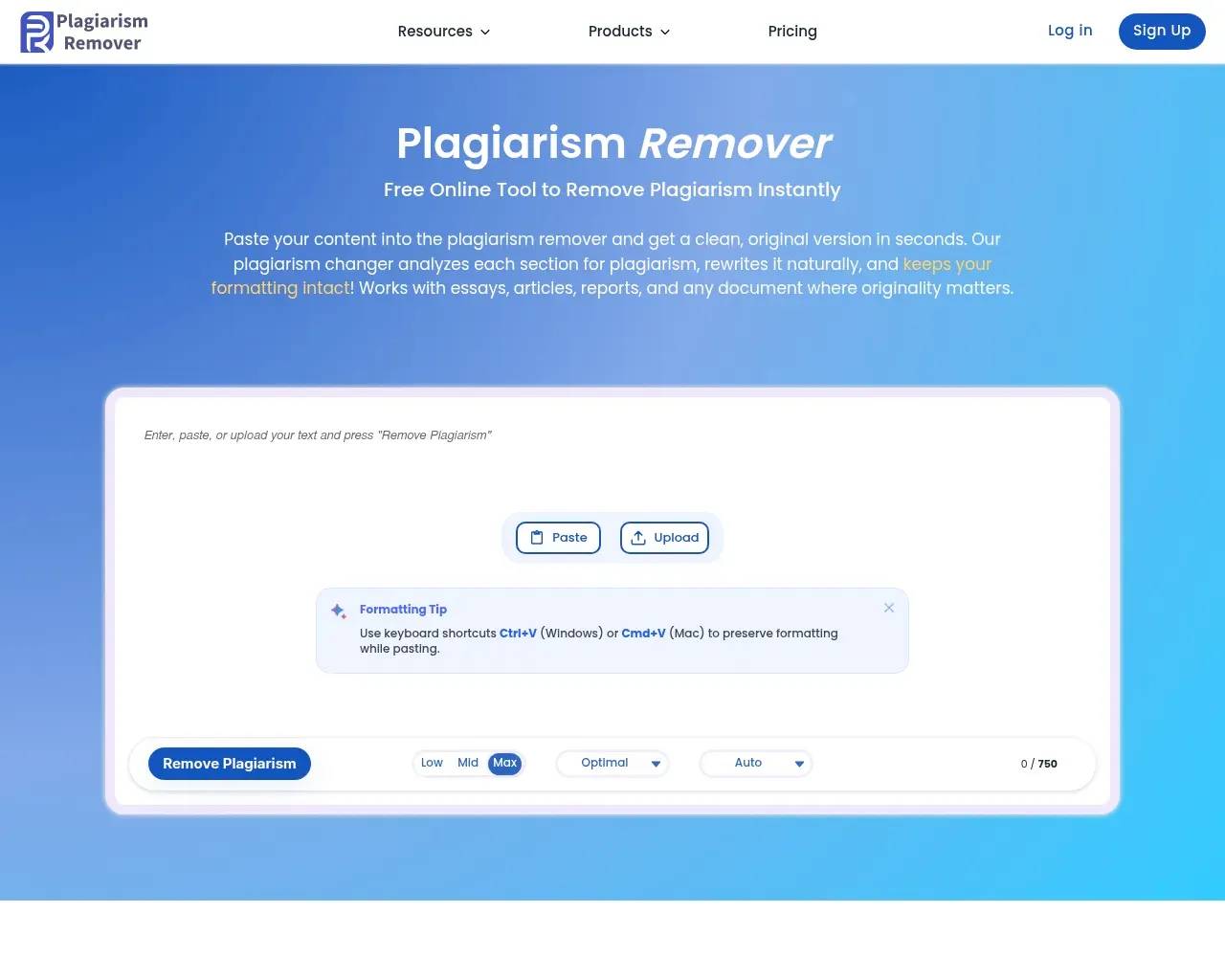
PlagiarismRemover.AI
FreemiumWhat Is PlagiarismRemover.AI?
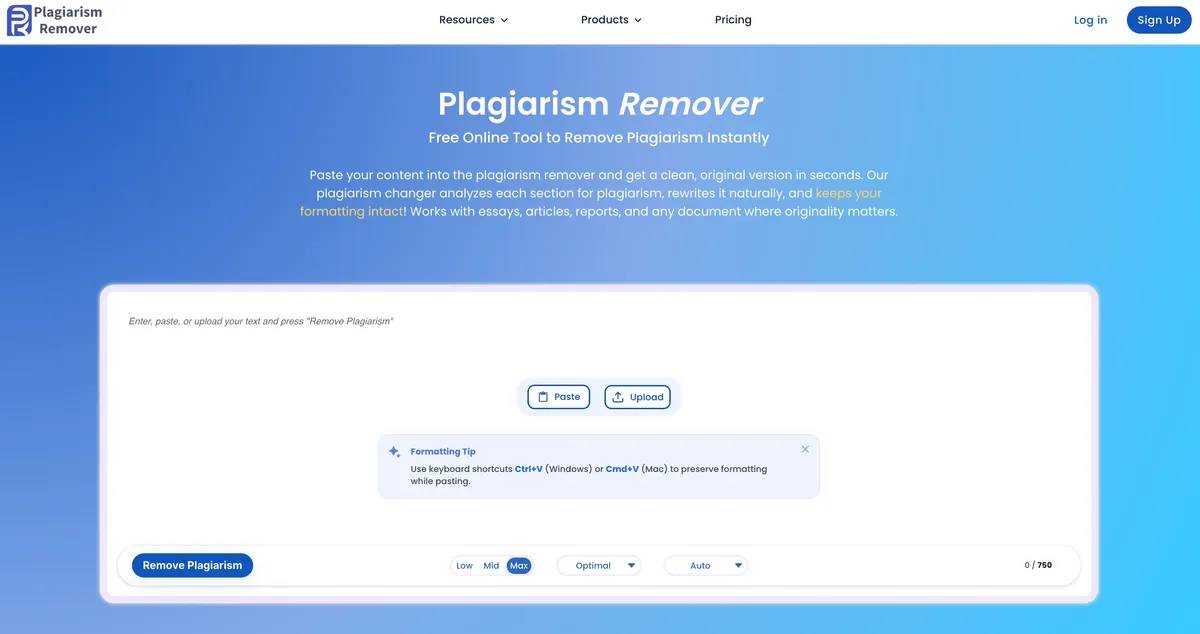 PlagiarismRemover.AI is an AI-powered text transformation tool that rewrites content to remove plagiarism and bypass AI detection. It combines a plagiarism scanner and a rewriting engine in a single interface, so users can check their content, rewrite flagged passages, and verify the result without switching between tools.
The tool targets three overlapping problems writers face in 2026: traditional plagiarism (text matching against existing sources), self-plagiarism (matching against your own previously submitted work), and AI detection (content flagged as machine-generated by tools like Turnitin and GPTZero). Its user base spans students, content teams, academics, and freelancers.
How It Works
The workflow is straightforward. Paste your content, select a rewriting mode and tone, click rewrite, review the output, and scan to verify. What sets PlagiarismRemover.AI apart from basic paraphrasers is the depth of rewriting. Standard tools swap synonyms while keeping sentence structure intact. Modern detectors catch this because they analyse structural patterns, not just vocabulary. PlagiarismRemover.AI restructures at the sentence and paragraph level, changing the statistical fingerprint that detectors target.
Rewriting Modes
The three-mode system gives genuine control over transformation depth. Low mode handles self-plagiarism and lightly recycled language with minimal changes, keeping your voice intact. Mid mode is the everyday setting for standard paraphrasing flags, restructuring sentences while preserving argument and factual accuracy. Max mode is built for heavily flagged or AI-generated content, rewriting at the paragraph level to change the rhythm, word predictability, and structural flow that Turnitin and GPTZero specifically analyse.
Having three distinct levels matters because a one-size-fits-all rewrite either under-processes heavily flagged content or over-processes text that only needed light restructuring. Most competing tools offer no such granularity.
Tone Settings
PlagiarismRemover.AI offers three tone outputs: Normal (neutral, no register adjustment), Professional (business and corporate register), and Academic (formal scholarly tone). The Academic setting is not a cosmetic filter. It preserves the formal register that university submissions require, which matters because a rewritten essay that sounds informal will raise red flags with a human reviewer even if it passes the detector. Dissertation chapters, journal submissions, and grant proposals benefit directly from this.
Built-in Plagiarism Scanner
The integrated scanner checks content against web and academic sources, highlighting flagged passages with similarity percentages. This means you identify problem areas before rewriting, target only the sections that need it, and verify the output is clean afterward, all without leaving the interface.
For users looking to build stronger paraphrasing fundamentals alongside the tool, this guide on paraphrasing without plagiarising covers the skill-building side.
Test Results
We ran three types of content through PlagiarismRemover.AI and checked every output against Turnitin and GPTZero.
Test 1: AI-generated blog draft (1,000 words). GPTZero initially flagged it at 92% AI-generated; Turnitin showed 23% similarity. After Max mode, GPTZero dropped to under 5% and Turnitin similarity fell to under 4%. The output read naturally with no meaning distortion.
Test 2: Academic literature review (750 words) with heavy paraphrasing from three published sources. Turnitin flagged 34% similarity. After Mid mode with the Academic tone, similarity dropped to under 6%. The scholarly register stayed intact and citations were preserved accurately.
Test 3: Self-matching (500 words). We submitted an essay, rewrote it with Low mode, and resubmitted. The self-matching score dropped from 100% to under 8%. The argument structure remained the same; the expression was different enough that Turnitin treated it as distinct content.
All three tests passed cleanly. No manual post-editing was required in any case.
How It Compares
The plagiarism remover category in 2026 includes QuillBot, Wordtune, Undetectable.ai, and WriteHuman. As a plagiarism remover, PlagiarismRemover.AI differs from these alternatives in three measurable ways.
First, rewriting depth. QuillBot and Wordtune primarily operate at the word and sentence level. They improve fluency but do not change structural patterns deeply enough to bypass Turnitin's 2026 detection model. PlagiarismRemover.AI restructures at the paragraph level, which is why it passes detection that synonym-swapped text fails.
Second, combined capabilities. Undetectable.ai focuses on AI detection bypass but lacks traditional plagiarism scanning. PlagiarismRemover.AI handles both in one interface. This is a practical difference for users who face both types of flags on the same document.
Third, pricing. At $4/month, PlagiarismRemover.AI undercuts every major competitor:
| Tool | Starting Price (Annual) |
|---|---|
| PlagiarismRemover.AI | $4/month |
| Wordtune | $6.99/month |
| QuillBot Premium | $8.33/month |
| Undetectable.ai | $9.50/month |
| WriteHuman | $18/month |
For a broader comparison across more tools and use cases, this roundup of the best plagiarism remover tools covers the full landscape.
Strengths and Limitations
The primary strength is rewriting depth. PlagiarismRemover.AI restructures text at a level that changes the statistical patterns modern detectors analyse, which is the single most important capability in this category. The mode flexibility, tone control, 16-language support, integrated scanner, and $4/month pricing round out a feature set that no single competitor matches.
The limitations are real but manageable. There is no browser extension, so the tool works through its web interface only. The free tier has word limits that heavier users will hit. And Max mode occasionally over-transforms passages under 100 words, where Mid or Low mode produces more natural output.
Who Should Use It
Students submitting through Turnitin will find the three-mode system covers everything from light self-plagiarism fixes to deep AI-content transformation, with the Academic tone keeping output appropriate for university work. Content teams publishing AI-assisted copy benefit from Max mode clearing both plagiarism and AI flags at scale. Academics recycling language across grants, conferences, and journals can use Low mode to restructure institutional language without losing formal register. ESL writers facing disproportionate false-positive rates benefit from the 16-language support and deep structural rewriting. Freelancers producing research-heavy deliverables get reliable paraphrasing-flag clearance through Mid mode.
The Verdict
PlagiarismRemover.AI is the most effective plagiarism remover we have tested in 2026. It combines deeper rewriting than any competing tool, integrated detection and rewriting in one interface, genuine tone control for academic and professional contexts, broader language support than the category standard, and pricing that undercuts every major alternative.
The tool handles the three problems writers actually face, traditional plagiarism, self-plagiarism, and AI detection, in a single workflow. For anyone who needs content to pass modern detection systems while still reading like a human wrote it, PlagiarismRemover.AI is the clearest recommendation in the category.
Published on: May 28, 2026
Looking for alternatives to PlagiarismRemover.AI? See all PlagiarismRemover.AI alternatives →
Have an AI tool of your own? Submit it below and get a free, in-depth product review article — just like this one.
Add your AI tool in seconds
Paste your URL and we'll draft the listing. You review and edit every field before submitting.
More Product Reviews:

By: AI Collection
