Обзор Podwise: Превращаем подкасты, которые вы забудете, в заметки, которые сохраните
By: AI Collection
At a glance

Podwise
FreemiumОбзор Podwise: Превращаем подкасты, которые вы забудете, в заметки, которые сохраните
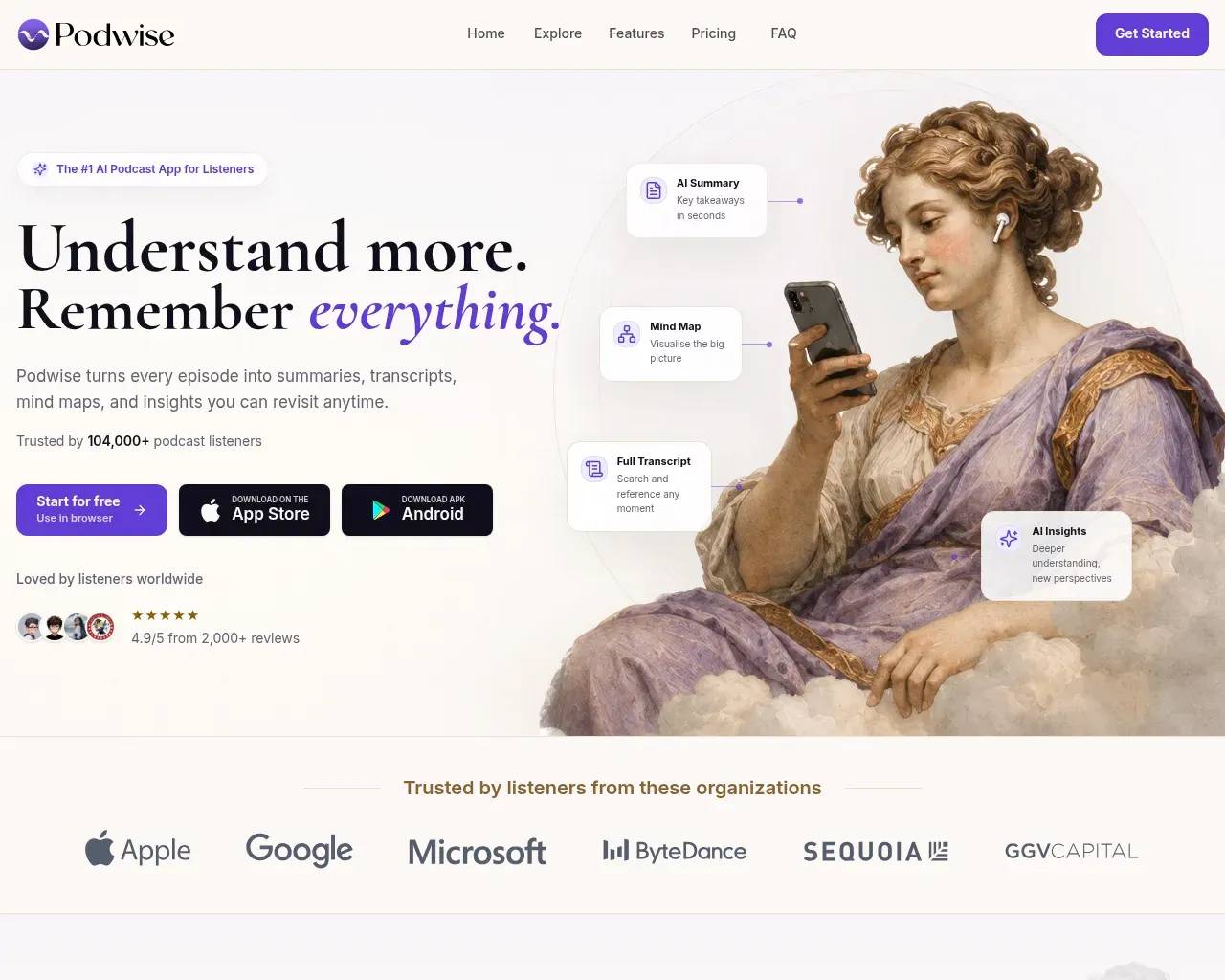
Вы заканчиваете 90-минутное интервью, киваете трём по-настоящему хорошим идеям, а к утру следующего дня смутно помните одну из них. Именно этот разрыв между прослушиванием и запоминанием и является причиной существования Podwise. Инструмент относится к подкасту не как к чему-то, что вы воспроизводите, а как к документу, который можно читать, искать и архивировать.
Podwise (от команды hardhackerlabs) обрабатывает эпизод и возвращает вам резюме, полный поисковый транскрипт, интеллект-карту и набор извлечённых идей. Сервис существует как минимум с сентября 2023 года, когда впервые появился на Hacker News, и сейчас работает в вебе, на iOS и Android. Слоган на собственном сайте — «приложение для подкастов с ИИ №1 для слушателей», с заявлениями о 104,000+ пользователях и оценкой 4.9/5 от 2,000+ отзывов — это обычный маркетинговый глянец. Куда интереснее то, что инструмент реально делает, когда в него загружают эпизод.
От аудио к чему-то, чем можно реально пользоваться
Добавьте эпизод из Apple Podcasts, Spotify, YouTube или RSS-ленты — или загрузите собственное аудио, например запись встречи или лекции — и Podwise каждый раз обработает его по одному и тому же конвейеру:
- ИИ-резюме — ключевые тезисы в начале, чтобы за секунды решить, стоит ли слушать остальное.
- Полный транскрипт — доступный для поиска, чтобы можно было перейти к точному моменту, когда кто-то сказал то, что вы смутно помните.
- Интеллект-карта — визуальное отображение структуры разговора и того, как его темы связаны между собой.
- Задайте любой вопрос — интерфейс чата, который отвечает на вопросы по конкретному эпизоду с временными метками, вместо того чтобы заставлять вас перематывать аудио.
В практическом обзоре маркетинговая исследовательская компания Cascade Insights охарактеризовала Podwise как «инструмент, ориентированный на исследования, который превращает длинное аудио в структурированные и доступные для поиска знания, а не действует как традиционный проигрыватель подкастов». Это важное разграничение: если вам нужен лучший проигрыватель для пассивного прослушивания — это не тот инструмент. Если вы хотите добывать идеи из аудио — это он.
Интеллект-карта — функция, которую все запоминают
Многие инструменты умеют делать резюме транскрипта. Интеллект-карта — это то, что чаще всего называют отличительной чертой Podwise. Вместо стены с маркированными пунктами она показывает форму разговора — основные нити, подпункты и их взаимосвязи — чтобы вы могли сразу попасть в нужный сегмент, а не читать сверху вниз. Cascade Insights выделила её как «ключевое конкурентное преимущество», и именно эту функцию независимые рецензенты упоминают первой. Для тех, кто синтезирует несколько эпизодов по одной теме, такая структура — это разница между кучей заметок и настоящей картой.
Знания могут и не оставаться внутри приложения. Podwise экспортирует резюме, выделения и интеллект-карты в Notion, Readwise, Obsidian, Logseq, Markdown и PDF — так что какой бы «второй мозг» вы ни использовали, результат попадает туда, а не в ещё один бункер. Он также поддерживает перевод: на главной странице рекламируются 12 языков с видом оригинала и перевода рядом, что действительно удобно, если вы следите за шоу на языке, который ещё изучаете.
Когда это перестаёт выглядеть как приложение для подкастов
Именно это и заслуживает место Podwise в каталоге, ориентированном на разработчиков. Помимо потребительского приложения, hardhackerlabs выпускает опенсорсный CLI, MCP-сервер и Agent Skill — всё на GitHub под лицензией MIT.
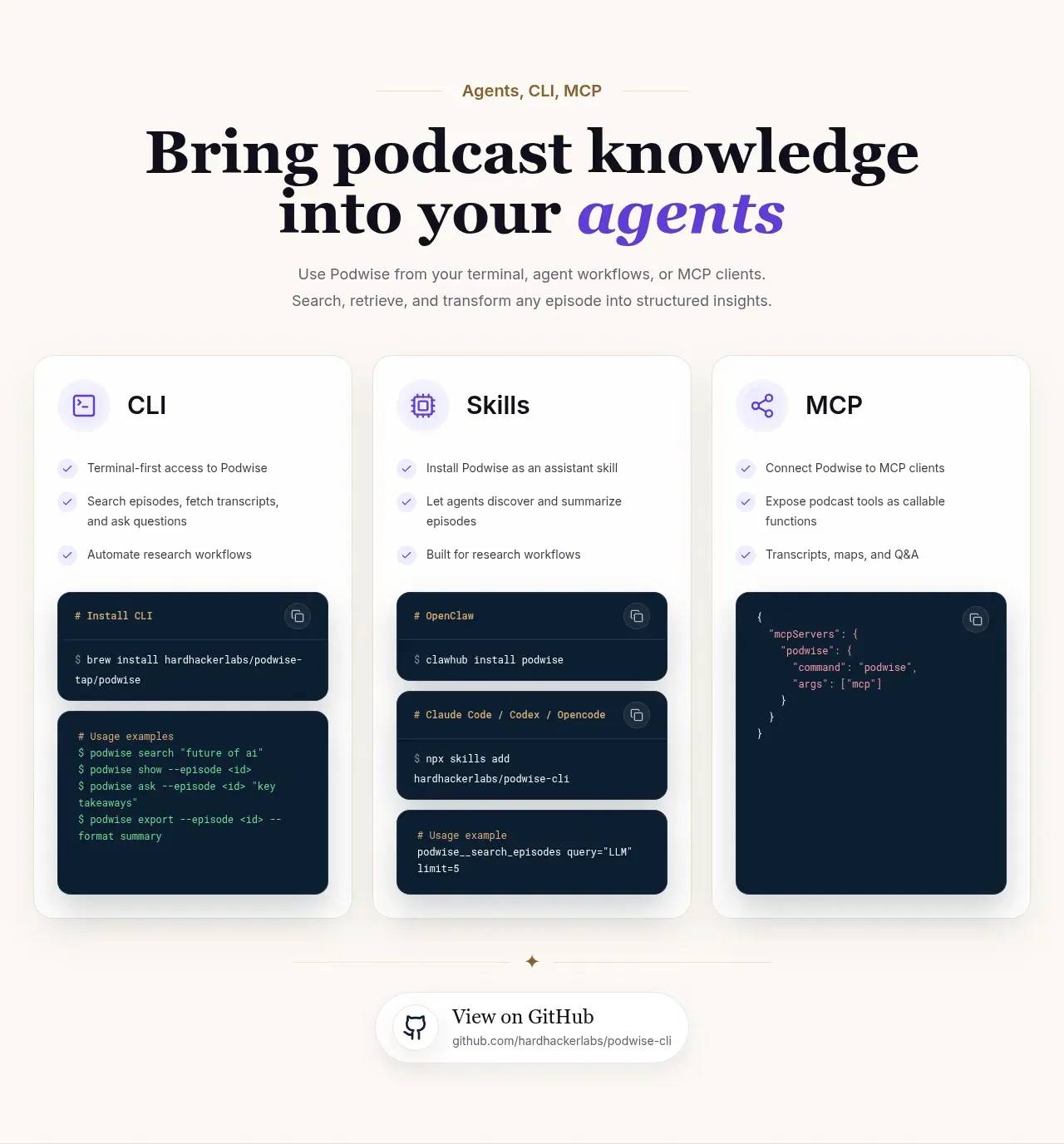
На практике это означает, что можно установить его с помощью brew install hardhackerlabs/podwise-tap/podwise и выполнять команды вроде podwise search "future of ai" или podwise ask --episode <id> "key takeaways" прямо из терминала. MCP-сервер предоставляет транскрипты, интеллект-карты и Q&A как вызываемые инструменты, поэтому агент в Claude Code, Cursor или другом MCP-клиенте может подтягивать содержимое подкаста в исследовательский процесс без копирования и вставки.
Здесь есть небольшая, но показательная история. Когда Cascade Insights рассматривала Podwise в августе 2025 года, единственным замечанием «где можно улучшить» было то, что продукту «есть куда расширить интеграцию с агентными средами ИИ». Репозиторий CLI был создан в марте 2026 года и активно обновлялся до конца мая — похоже, команда построила именно тот мост, которого требовал тот обзор. Репозиторий набрал около 255 звёзд; скромно, но реально, и активность свежая, а не брошенная.
Что это стоит
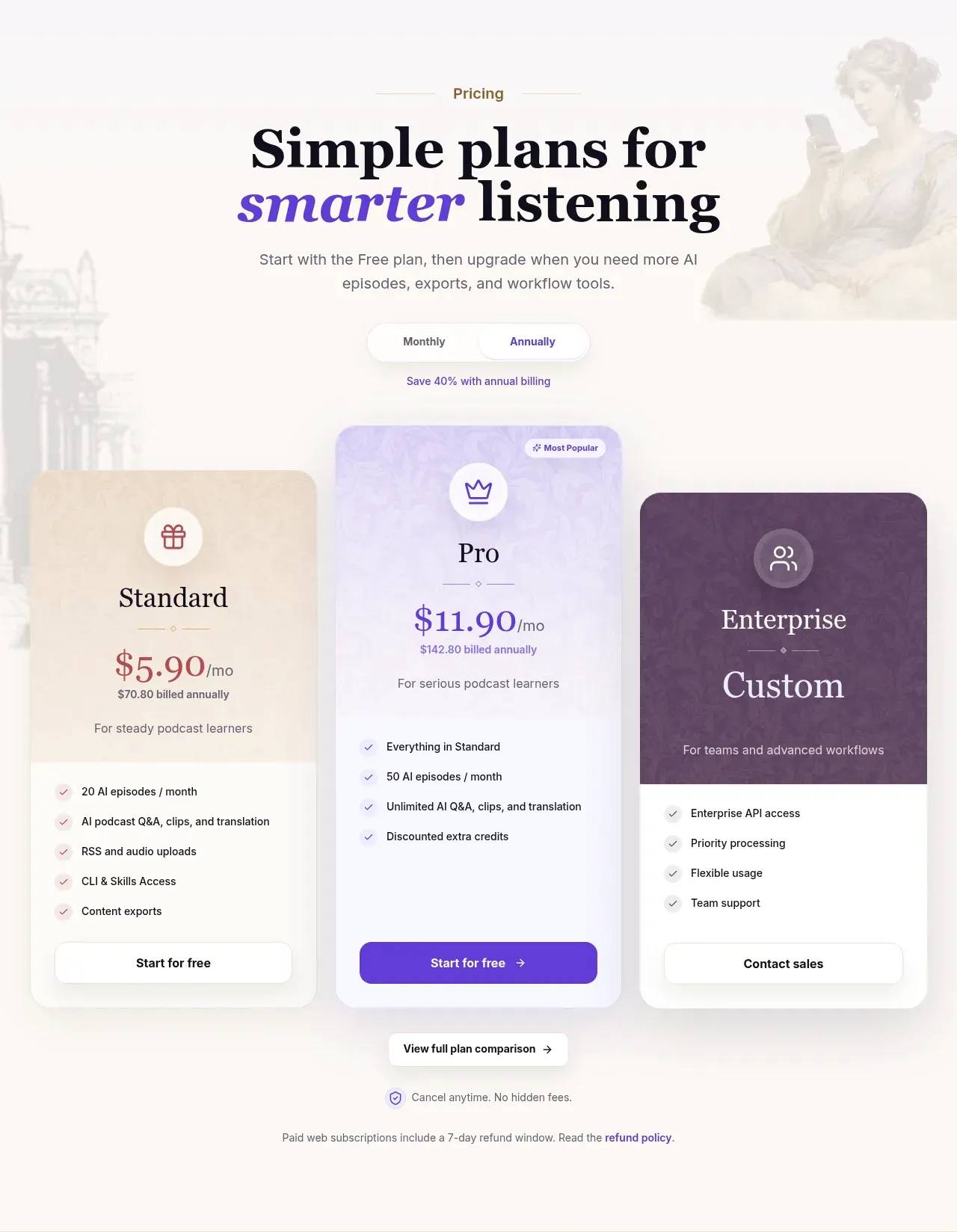
Есть бесплатный план для пробы, затем два основных платных уровня (показаны ежемесячные цены; при годовой оплате скидка 40%):
- Стандартный — $5.90/мес ($70.80/год): 20 ИИ-эпизодов в месяц, Q&A, клипы, перевод, RSS и загрузка аудио, плюс доступ к CLI и Skills.
- Pro — $11.90/мес ($142.80/год): всё из Стандартного, 50 ИИ-эпизодов в месяц, неограниченные Q&A и перевод, а также скидки на дополнительные кредиты.
- Корпоративный — индивидуально: доступ к API, приоритетная обработка и командная поддержка.
Podwise предлагает 7-дневное окно возврата на платные веб-подписки и говорит, что отменить можно в любой момент. (Стоит отметить: цены в сторонних листингах до сих пор указывают старые цифры $9–$20, поэтому перед подпиской проверяйте актуальные данные на сайте.)
Для кого это — и кому лучше пройти мимо
Podwise создан для людей, которые слушают, чтобы учиться: основателей, извлекающих стратегии из бизнес-шоу, студентов, превращающих лекции в конспекты, исследователей, ищущих конкретный момент в длинном разговоре, создателей контента, охотящихся за цитатами без перемотки эпизодов целиком. Если вы обрабатываете несколько эпизодов в неделю и хотите сохранять услышанное, ежемесячная стоимость легко оправдана.
Если вы слушаете в основном для расслабления — всё это вам не нужно. И даже для продвинутых пользователей стоит сделать несколько оговорок. Лимиты эпизодов реальны: даже Pro ограничен 50 ИИ-эпизодами в месяц, прежде чем придётся докупать кредиты, так что очень активным пользователям следует посчитать. Независимые рецензенты называли его «дорогим» в сравнении с простыми инструментами для резюмирования и отмечали, что ссылки на метки времени в транскрипте могут быть немного приблизительными, когда нужен точный переход. Есть и небольшое несоответствие, которое стоит проверить под свои нужды: на главной странице заявлено 12 языков перевода, а в собственном llms.txt сайта перечислено восемь — так что если конкретный язык является причиной регистрации, лучше сначала убедиться, что он поддерживается. Ни одно из этих замечаний не является критическим; это то, что хотелось бы знать до второго платёжного месяца.
Для инструмента, вся работа которого состоит в том, чтобы помочь вам запомнить услышанное, Podwise удивительно продуманно подходит к тому, куда эти знания попадают — а поддержка CLI, Skills и MCP переводит его из разряда «неплохое приложение для подкастов» в нечто, что можно встроить в реальные исследовательские рабочие процессы.
Использованные источники
- Главная страница Podwise — позиционирование продукта, набор функций, актуальные цены, поддерживаемые источники и инструменты для разработчиков.
- llms.txt Podwise — официальное описание транскрипции, структурированного вывода и перечисленных языков перевода.
- hardhackerlabs/podwise-cli на GitHub — подтверждение опенсорсного CLI, лицензии MIT, количества звёзд и актуальной активности в коммитах.
- Обзор от маркетолога-исследователя: podwise.AI (Cascade Insights, Шон Кэмпбелл) — независимый взгляд на позиционирование инструмента для исследований, дифференциатор интеллект-карты и пробел в интеграции с агентами.
- Hacker News (поиск Algolia) — оригинальный «Show HN» 2023 года и запуск CLI 2026 года, использованные как сигналы долговечности и тяги.
- Агрегированные сторонние отзывы (Product Hunt, AlternativeTo, Productivity Academy) через веб-поиск — качественные сильные стороны и критика по поводу цены и приблизительных меток времени.
Published on: June 4, 2026
Ищете альтернативы Podwise? Все альтернативы Podwise →
Have an AI tool of your own? Submit it below and get a free, in-depth product review article — just like this one.
Добавьте свой AI-инструмент за секунды
Вставьте URL — мы подготовим черновик. Вы проверяете и редактируете каждое поле перед отправкой.
More Product Reviews:

By: AI Collection