The best AI tools for sales outreach and lead generation in 2026
By: AI Collection
At a glance





Sales outreach has two halves that often get sold as one. First you have to figure out who is actually worth contacting, then you have to reach those people without torching your sender reputation or spending your week in copy-paste. The tools in our Sales Outreach and Lead Gen category split roughly along that line: some build the list, some run the sending, and a couple handle the research that should happen before anyone drafts a first email.
This is a directory pick, not a lab bake-off. We ranked these by our own editorial signal plus the catalog data behind each listing, and read each tool's current homepage to keep the details honest. Prices are what the vendors showed as of November 2026; treat them as a starting point, not a quote. A few of the tools below sit at the edges of outreach, and we've said so plainly where that's the case.
THEO, for the research before you reach out
Good outreach starts with knowing where you actually stand in a market, and that is what THEO is built for. It produces a structured read of a product category: who owns which territory, how the competitive landscape is organized, and where the positioning gaps sit. The output follows a 15-section method the company calls CLEAR, covering things like positioning territories, clusters, and buyer segments, and it is designed to drop into ChatGPT or Claude so you can reshape the findings into whatever format your team works in.
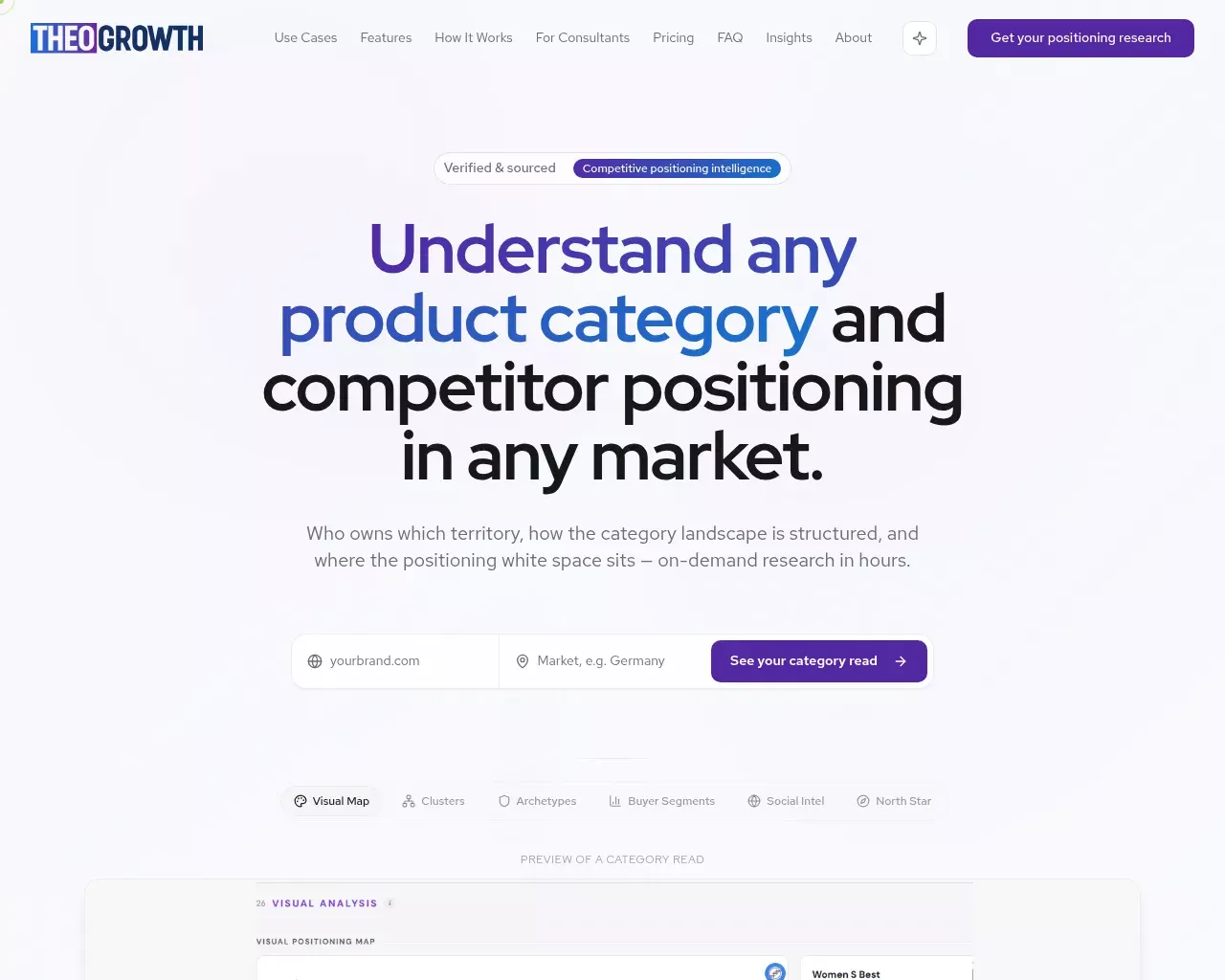
The pitch is turnaround: the kind of category read a senior analyst would spend weeks on, delivered in hours and re-runnable without starting over. Entry pricing is pay-per-use, with a basic structuring run listed at $10 that covers a few uploaded documents and web context mining. It is not an outreach tool in the cold-email sense; it fits the stage before that, when you are deciding how to frame a pitch and which segments are worth the effort.
Reply.io, the outbound engine
Reply.io is the most complete outreach platform on this list, and the reason it anchors the category. It runs multichannel sequences across email and LinkedIn, automates follow-ups, and layers in a large B2B contact database so you can find prospects and reach them in the same place. More recent additions lean into AI agents and let you drive outbound from tools like Claude and Cursor over MCP, unusual flexibility for a platform this established.
The feature that matters most for anyone sending at volume is deliverability. Reply bundles unlimited mailboxes and warm-ups, which is the difference between a campaign that lands and one that quietly rots in spam. Pricing runs from a free tier through a Starter plan at $59 per user per month, a Professional plan at $99, and an Ultimate plan at $139 billed annually. The per-seat model adds up for a team, so it rewards you for actually running campaigns rather than kicking the tires. If you want one tool to carry most of the outbound workflow, this is the one to try first.
MyInfluencer, creator lists you can actually email
Not all outreach is cold B2B email. If your growth motion runs through creators, MyInfluencer is a search engine for exactly that. You describe a campaign, get a matched list of creators by niche, audience, and platform, then pull their verified contact emails and export the whole thing as a CSV without leaving the tool. The point it keeps returning to is contactability: a database of influencers is only useful if you can actually reach them.
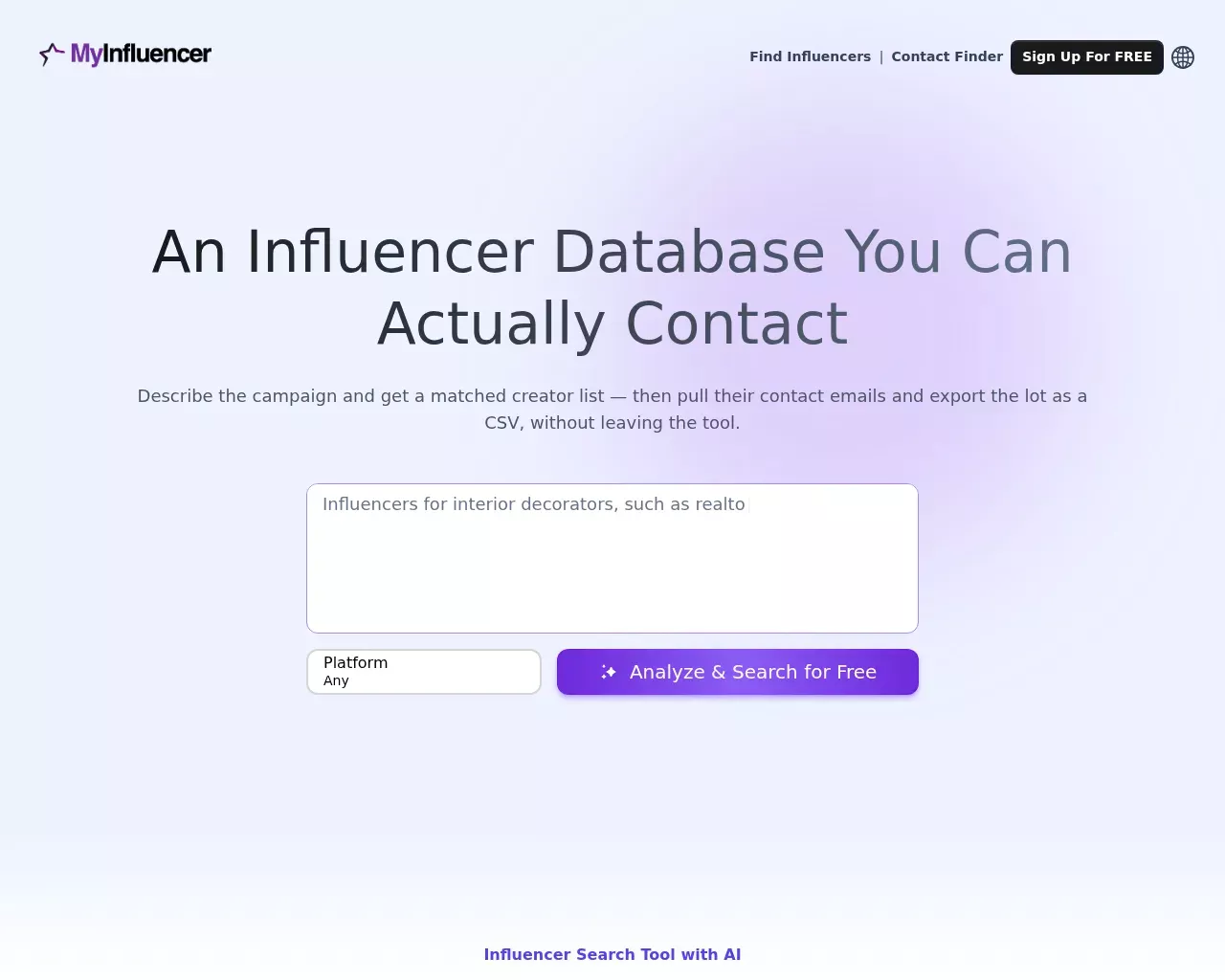
Beyond search, it scores how well a creator fits a given campaign and suggests content angles, which trims the manual vetting that eats the early hours of influencer marketing. It is aimed at small businesses, solo founders, and in-house marketers rather than large agencies. Pricing starts at $60 a month for Starter and $120 for Pro, with a one-time $10 pack if you just need a batch of contacts without a subscription — a friendly on-ramp for a first campaign.
ApplyPass, the same mechanics aimed at your own job hunt
ApplyPass is the outlier here, and worth flagging as such. It uses the same idea as high-volume sales outreach — apply the automation to a long list of targets — but the targets are jobs, not prospects. It auto-applies to more than 400 software engineering roles a week through an AI matching engine, optimizes submissions for applicant tracking systems, and focuses on US and Canada positions. There is coaching and interview support bolted on alongside the volume play.
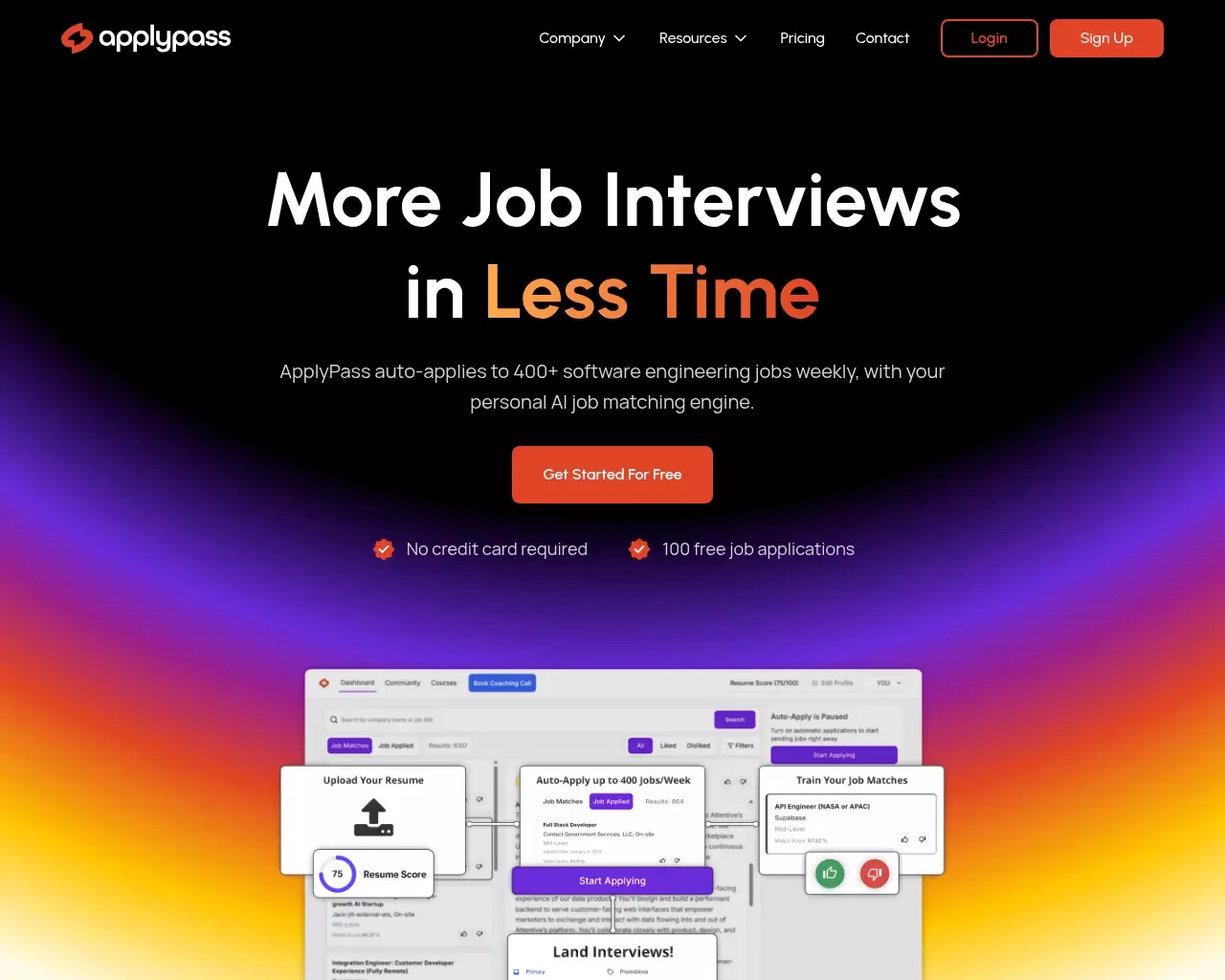
If you are a job seeker in engineering, that is a compelling pitch, and a free tier of 100 applications lets you test it before paying ($20 a month for Traction, $100 for Accelerate). If you came looking for B2B sales tooling, it is not that — we include it because it genuinely sits in this category, but go in knowing which kind of outreach it automates.
MyMap SWOT generator, a quick strategic gut-check
MyMap's SWOT Analysis Generator is the smallest tool on the list and the most single-purpose. You describe a business, product, or project, and it builds a four-part SWOT grid — strengths, weaknesses, opportunities, threats — in a clean 2x2 layout, then suggests actions from each quadrant. It is free to start, needs no card, and exports to PDF and docs.
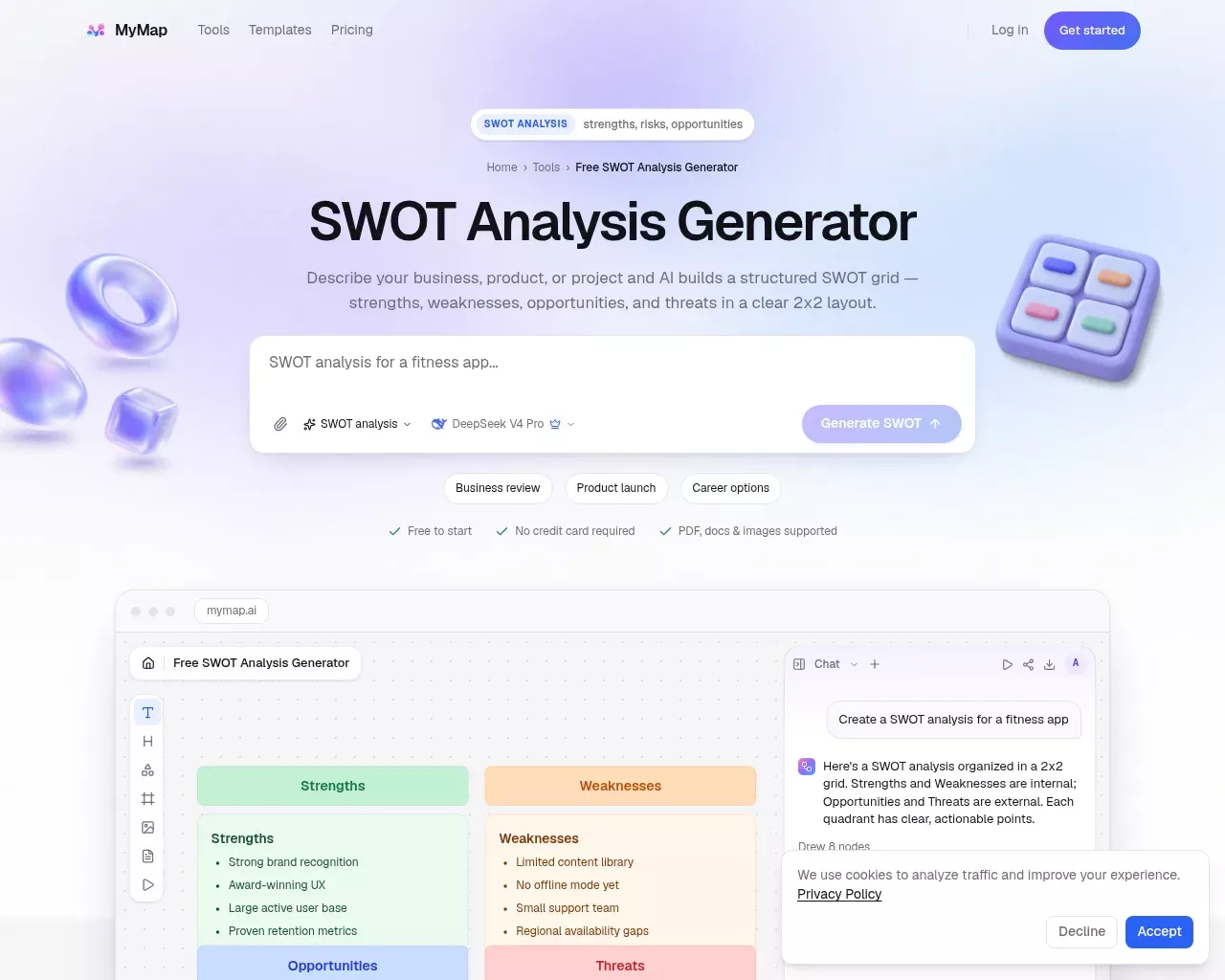
It earns its spot as a planning aid rather than an outreach tool. Before you build a target list or write a sequence, a fast SWOT can sharpen who you are really competing against and where your pitch has room to land.
LinkDR, treating links as a lead source
LinkDR is outreach of a different kind: outreach to publishers, done for you. It is a managed backlink service that sources relevant sites, pitches editors, and places dofollow links in articles that already rank, drawing on a pool of more than 10,000 vetted publishers. The angle is inbound rather than outbound — links that pull in buyers who are already searching, instead of emails that interrupt them.
Pricing is per live link and scales with the site's authority, starting around $136 a month for a DR 30+ placement and climbing through higher tiers. A 60-day refund and indexation guarantee is a reasonable hedge for a service whose results depend on someone else's editorial calendar. This is the most hands-off and most expensive option here, and it suits a team that wants SEO-driven lead flow and would rather buy the outcome than run the campaigns.
NioLeads, the list that feeds everything else
NioLeads sits at the top of the funnel, and it pairs naturally with a sender like Reply. It scrapes prospect data from LinkedIn, Sales Navigator, and Apollo, then finds and verifies professional email addresses using a stack of more than 15 data vendors including Hunter, RocketReach, and Dropcontact. The company claims under 5% invalid emails out of the box, with real-time verification to keep bounce rates down.
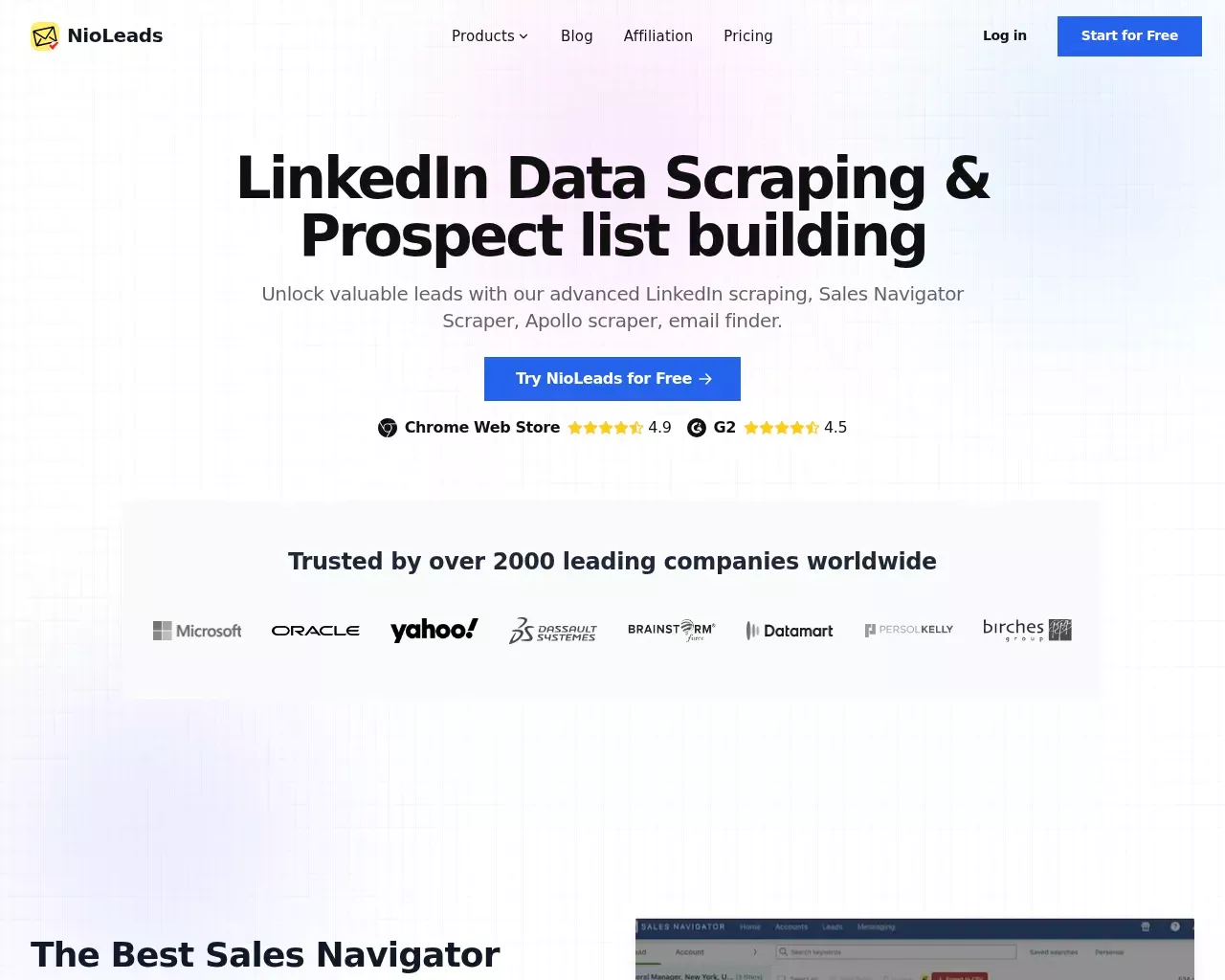
In practice it is the step before outreach: export a Sales Navigator search in a click, enrich the contacts, and hand a clean list to whatever sends your sequences. It carries a 4.9 rating on the Chrome Web Store and 4.5 on G2, and pricing is the most approachable on the list — $9 a month for Lite, $29 for Starter, $39 for Basic. For solo founders doing their own prospecting, that is hard to argue with.
Our picks
For a team that wants one platform to carry most of its outbound, Reply.io is the pick: multichannel sequences, a built-in database, and the deliverability plumbing to keep campaigns out of spam. Pair it with NioLeads as the runner-up — not as a competitor, but as the list-builder that feeds it clean, verified contacts for a few dollars a month. If your outreach runs through creators rather than inboxes, MyInfluencer is the better starting point, and its $10 one-time pack lets you prove the motion before committing.
Common questions
Do I need separate tools for finding leads and sending outreach? Not always. Reply.io bundles a contact database with its sending, so a smaller team can start there. But a dedicated list-builder like NioLeads usually gives you cleaner, more targeted data than an all-in-one database, which is why many people run the two together.
Are LinkedIn scraping tools safe to use? NioLeads publishes a compliance stance, but any LinkedIn automation carries platform risk and data-protection obligations that vary by region. Check how a tool sources data and how your outreach complies with rules like GDPR before you scale.
What is the cheapest way to get started? Several have real free or near-free entry points: Reply.io and ApplyPass offer free tiers, MyMap's SWOT generator is free to start, and NioLeads begins at $9 a month. MyInfluencer's one-time $10 pack tests a single campaign without a subscription.
Published on: November 24, 2026