The Best AI Chatbot Tools in 2026
By: AI Collection
At a glance








Adding a chatbot to your site used to mean hard-coding decision trees and watching customers give up the moment they asked something off-script. The current generation reads your website, your PDFs and your help docs, then answers in plain language and cites where the answer came from. Most install with one line of code and go live in an afternoon.
The catch is that "AI chatbot" now covers a lot of ground. Some deflect support tickets; others qualify sales leads, sit inside a Shopify store, or turn a pile of documents into something you can interrogate. Picking well means matching the tool to the job, not chasing the longest feature list.
How we ranked these
These eight come from our directory's editorial picks for the chat bot category, our catalog data on each tool, and a fresh look at every homepage while writing this. It is an editor's shortlist, not a lab benchmark, so treat the order as a starting point rather than a final verdict for your use case. We dropped two entries that ranked well but no longer belong: one had been discontinued and folded into its parent company's HR suite, and a duplicate listing pointed at the same tool twice.
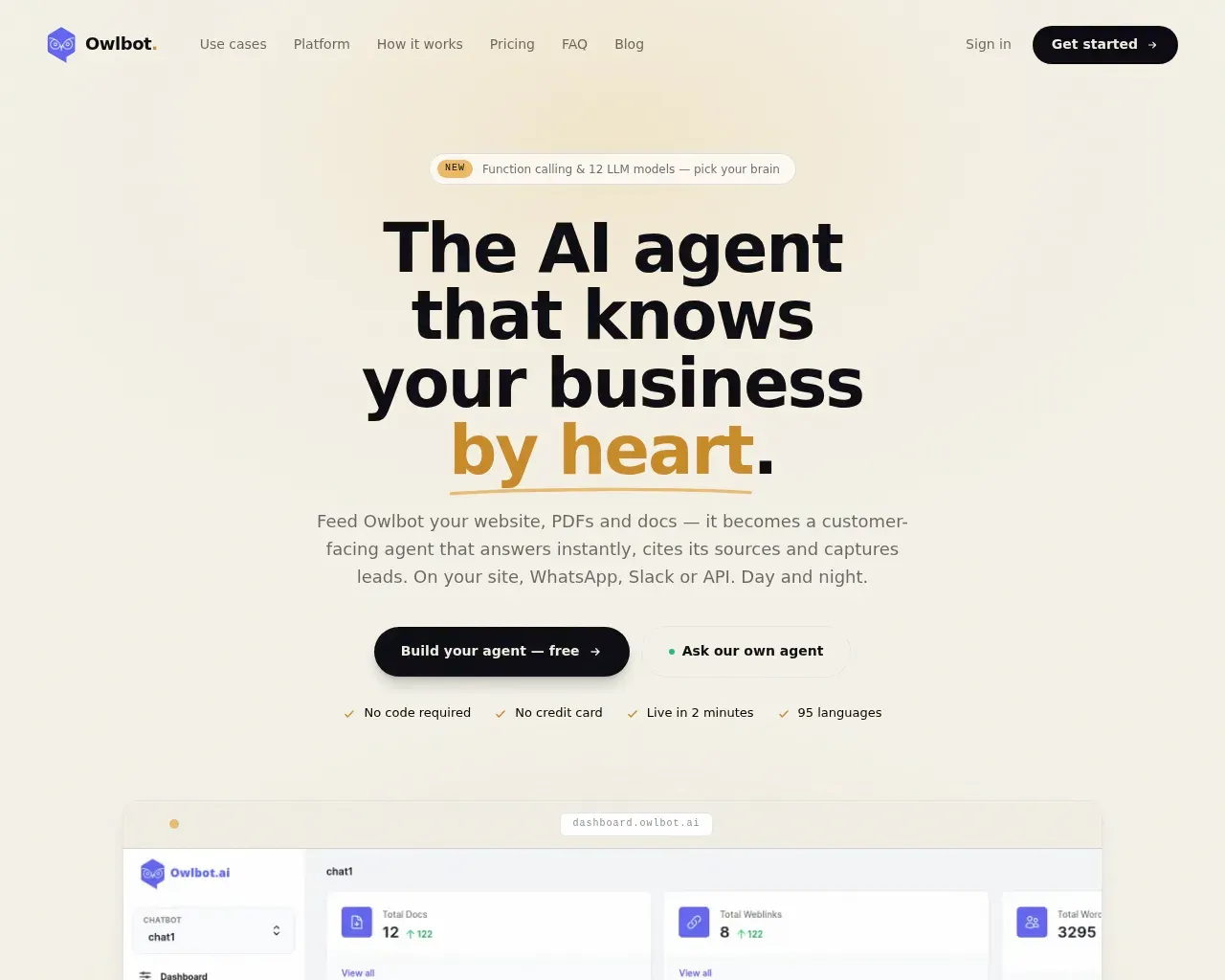
Owlbot
Owlbot is the most rounded pick here for a business that wants one agent doing several jobs. You feed it your website, PDFs and Word docs, and it becomes a customer-facing agent that answers instantly, attaches the source document to each reply, and hands off to a human when it should. It runs on your site, over WhatsApp or Slack, or through the API, and it speaks 95 languages out of the box.
The part worth calling out is source citation. Every answer links back to the document it came from, which is how you keep an AI agent from confidently inventing a shipping policy. You can also pick from 12 language models, so you are not locked into one provider's quirks. Paid plans run $19, $39 and $59 a month, scaling on the number of chatbots and monthly messages, with API access and white-labeling on the higher tiers. It fits a small-to-mid business that wants one support-and-sales agent live quickly, with citations it can trust.
Chatbase
Chatbase plays in the same space but leans further toward customer experience at scale, and says over 10,000 businesses use it. Its agents work across live chat, email and voice, and it frames the work as a lifecycle: connect your data and set guardrails, test the agent against real scenarios before it goes live, deploy across channels with one click, then review and refine.
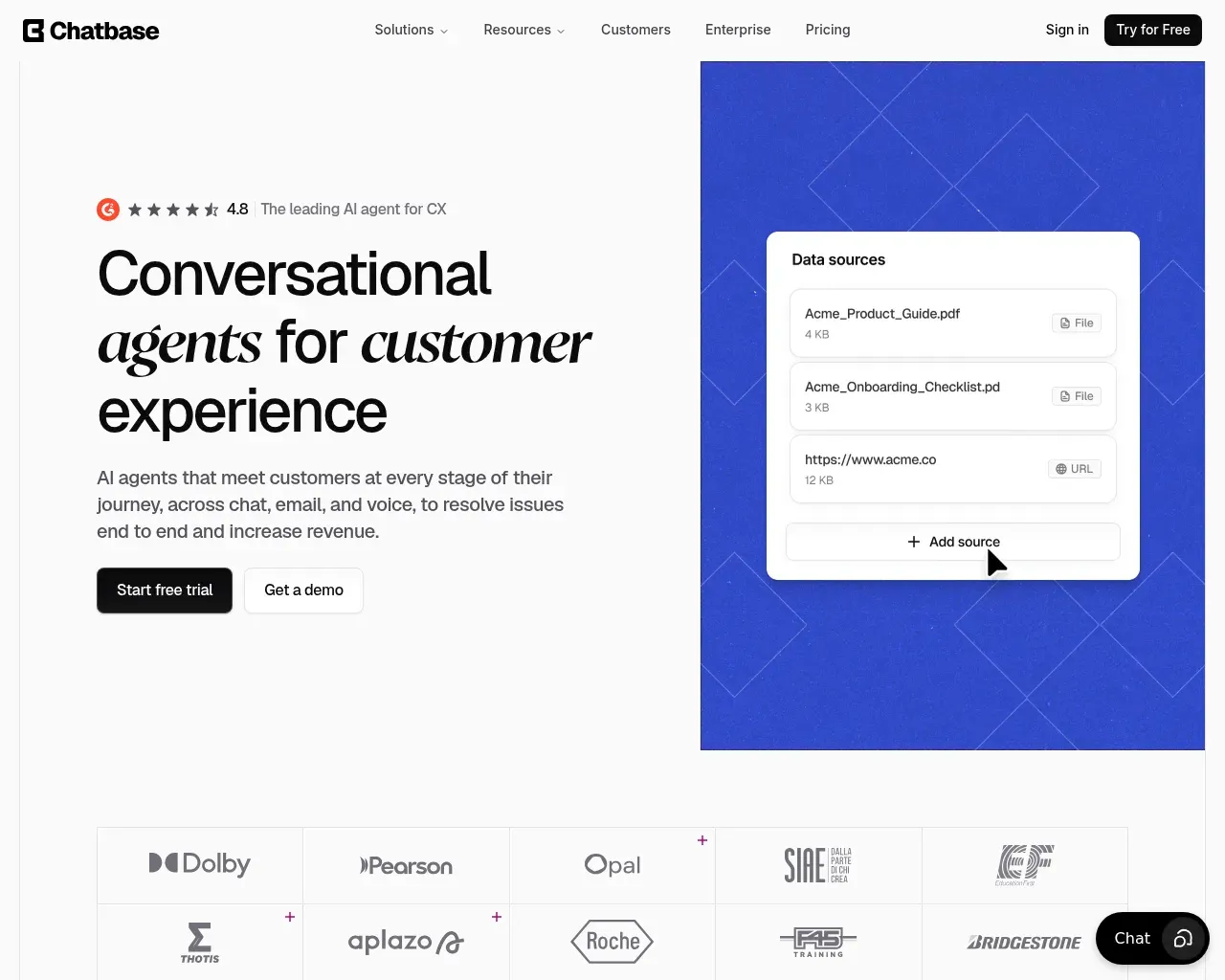
That test-before-deploy step is more thought-out than most competitors bother with, and it matters when the agent speaks for your brand on the phone. Pricing starts free, then Hobby at $40, Standard at $150 and Pro at $500 a month, with 20% off on yearly billing. If you run support across more than website chat, Chatbase is built for that breadth.
My AskAI
My AskAI takes a narrower, sharper angle: support deflection. Rather than replacing your help desk, it bolts onto the one you already run. It integrates with Intercom, Zendesk and Freshdesk, and its pitch is deflecting up to 75% of incoming support requests before they reach a human.
That framing is the reason to shortlist it. If you have already invested in a support stack and your team is drowning in repetitive tickets, a tool that plugs into it is easier to justify than a rip-and-replace. There is no free plan, but there is a 30-day free trial; Pro runs $199 a month, Scale $499, and Enterprise starts at $999 for high volume, which works out to roughly $0.10 per ticket. Confirm the integration depth for your specific help desk first, since "works with Zendesk" can mean anything from a deep sync to a basic widget.
Chatsimple
Chatsimple is aimed at revenue teams rather than support queues. It builds an AI agent that engages site visitors, qualifies leads, enriches their profiles and routes the strongest prospects to the right people. It reports use across more than 100 B2B companies and carries SOC 2 Type II, SOC 3, GDPR and CCPA compliance, the paperwork enterprise buyers ask about first.
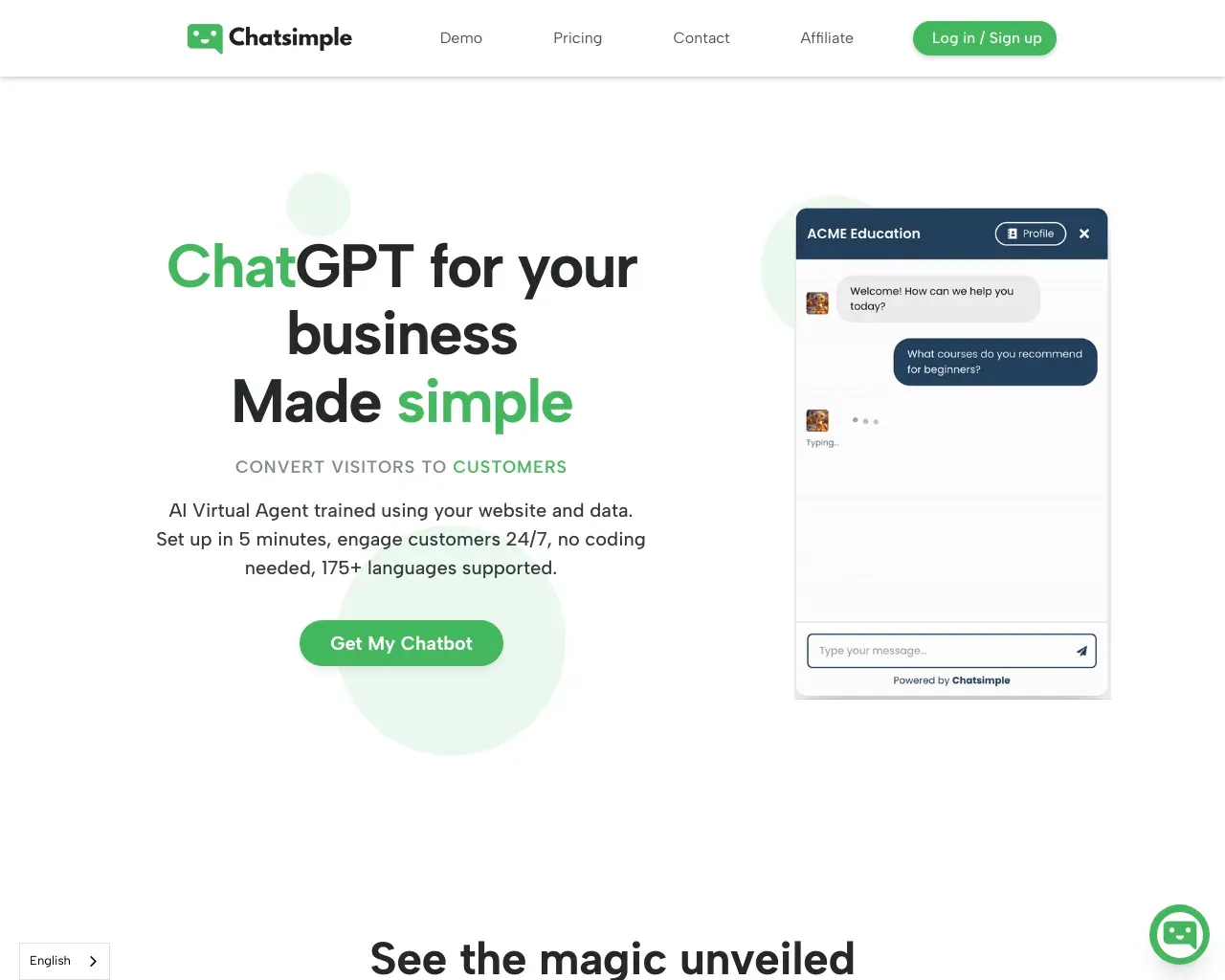
One honest note: Chatsimple has now rebranded to Expertise AI, and chatsimple.ai redirects there. The product is pitched as enterprise AI agents for sales and customer experience, and pricing is no longer published: all three tiers (Premier, Enterprise and Unlimited) are sold through a demo call. If your goal is pipeline rather than ticket deflection, this is the one built for it.
Humata
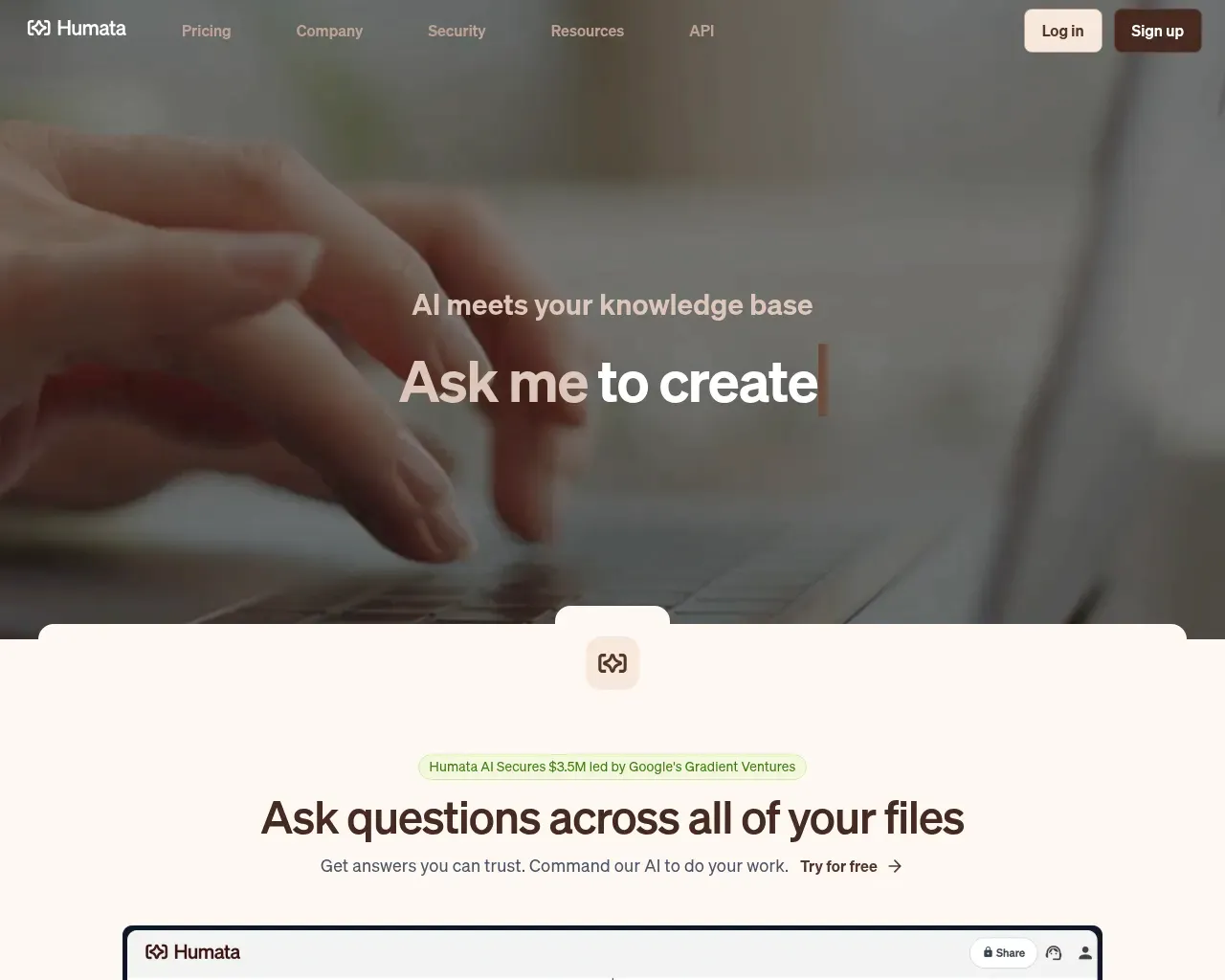
Humata solves a different problem: reading things you do not have time to read. It is closer to ChatGPT for your documents. Upload technical papers, contracts or research, and ask it to summarize findings, compare files and pull answers with citations back to the source page. Those cited links let you trace every claim, and it can embed in a webpage to answer questions from documents you would rather not publish in full.
The company raised $3.5 million in a round led by Google's Gradient Ventures, a reasonable signal of staying power in a crowded field. Pricing is unusually accessible: a free tier, a $9.99 Expert plan, a $49 per-user Team plan, and custom Enterprise pricing. If your problem is "I have 400 pages and one question," Humata is the specialist.
Chatbit
Chatbit is the no-frills website chatbot on this list, and that is a compliment. You add your website and files, it trains a custom GPT on that data, and you drop the widget in with a single line of code. It handles up to 11 million characters of context, lets you tune personality between creative and precise, customizes the look to your brand, and collects leads through the chat.
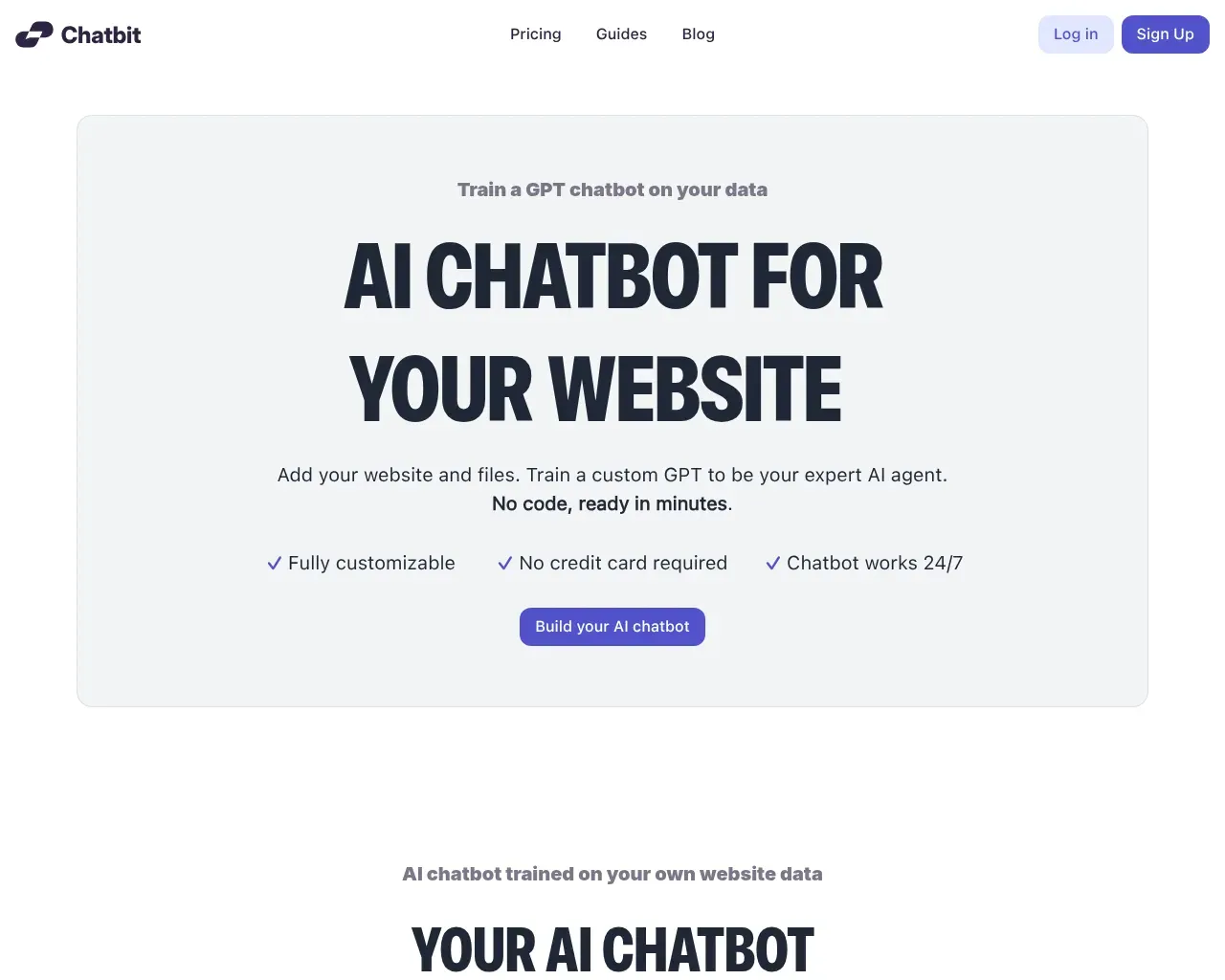
There is nothing exotic here, which is why it suits a solo founder or small marketing team that wants a competent site assistant without a procurement process. It starts free, with Core at $19, Growth at $99 and Enterprise at $399 a month. For a first chatbot on a small site, the free tier is a genuine place to start.
CustomGPT
CustomGPT targets businesses that care about accuracy above all. Its no-code builder turns your content into a custom GPT, and puts anti-hallucination front and center, alongside data connectors, a RAG API and a stack of security and compliance features. It positions itself for customer support, enterprise knowledge search and website chat, with angles for government, education and professional services.
That accuracy focus is the reason to pick it over a lighter tool. If a wrong answer carries real cost, a platform built around grounded, citation-backed responses and an API you can wire into your product earns the premium. Its standard plan lands around $99 a month, above the hobby tools and squarely in business territory. This is a build-it-into-our-product choice more than a drop-in widget.
HeiChat
HeiChat is the specialist for online stores. It is an AI commerce assistant built first for Shopify, with WooCommerce and plain-website installs available, and reports a 4.9-star Shopify rating across 1,500-plus stores. It answers shipping, sizing, stock and policy questions, recommends products, and supports more than 70 languages, all grounded in your own catalog.
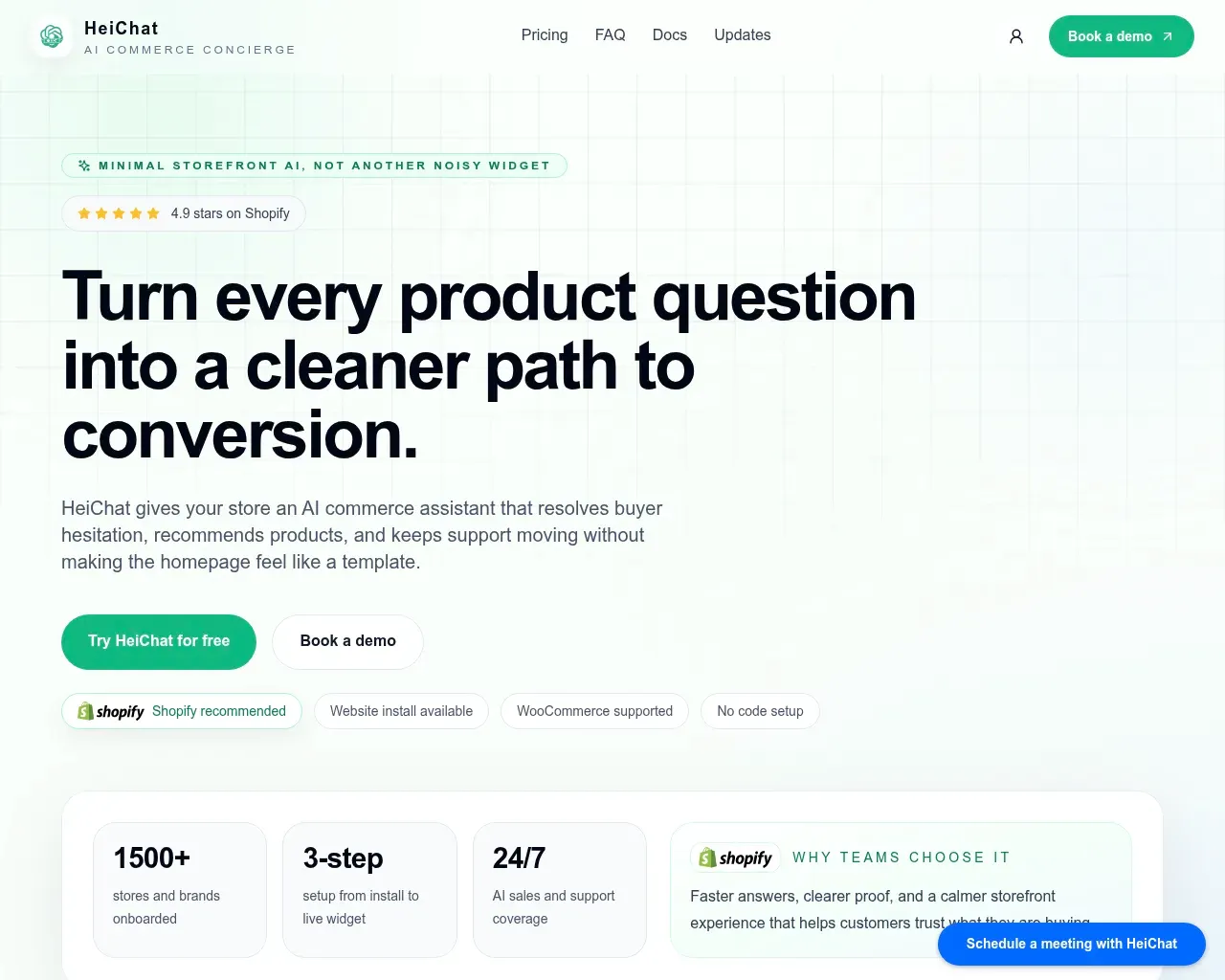
For a store owner, the appeal is that it speaks e-commerce natively instead of being a generic bot you bend into shape. Setup is three steps, and pricing is friendly: free to start, then Pro at $29.90, Pro Plus at $69.90 and Pro Max at $299 a month. If you sell on Shopify and want product answers that push toward a sale, this is the natural pick.
Which one should you choose
If you want a single verdict: for a general small-business support-and-sales agent that goes live fast and cites its sources, start with Owlbot, with Chatbase as the runner-up once you need email and voice as well as chat. From there it splits by job. Chasing sales pipeline points to Chatsimple; buried in documents means Humata; a Shopify store makes HeiChat the obvious call; and a team that cannot tolerate a wrong answer should test CustomGPT. Chatbit covers the budget-conscious end, and My AskAI the help-desk-integrated one.
Most of these offer a free tier or trial, so the real test costs nothing but an afternoon. Feed each one your actual content, ask the questions your customers actually ask, and see which stays grounded.
Frequently asked questions
How long does it take to set up an AI chatbot? For the website-focused tools here, most advertise going live in minutes to an afternoon: you connect your site and files, the tool trains on them, and you paste a snippet into your page. Deeper help-desk or store integrations take longer to configure and test.
Will the chatbot make up answers? That is the central risk, and it is why source citation matters. Owlbot, Humata and CustomGPT all emphasize grounding answers in your documents and linking back to the source. No tool is immune, so test each against edge-case questions before you trust it with customers. And no, you do not need to code: every tool here markets a no-code setup, with APIs available only if you want to wire the agent into your own product.
Which is best for an online store? HeiChat is built specifically for e-commerce, with a Shopify-first install and product recommendations. A general website chatbot can work on a store too, but a commerce-native tool understands stock, shipping and product discovery out of the box.
Published on: October 21, 2026