WordfixerBot Review: A Budget Paraphraser Built Around Tone Control
By: AI Collection
At a glance
3.0 / 5
Wordfixerbot
FreemiumMost AI paraphrasers give you one rewrite and call it done. WordfixerBot's pitch is narrower and more useful: rewrite the same passage in a specific voice. Pick "formal" for a cover letter, "casual" for a newsletter, "persuasive" for a landing page, and the tool rephrases accordingly. It is a small, single-purpose writing utility rather than a full writing suite, and for a few dollars a month that focus is either exactly what you want or clearly not enough.
What you actually get
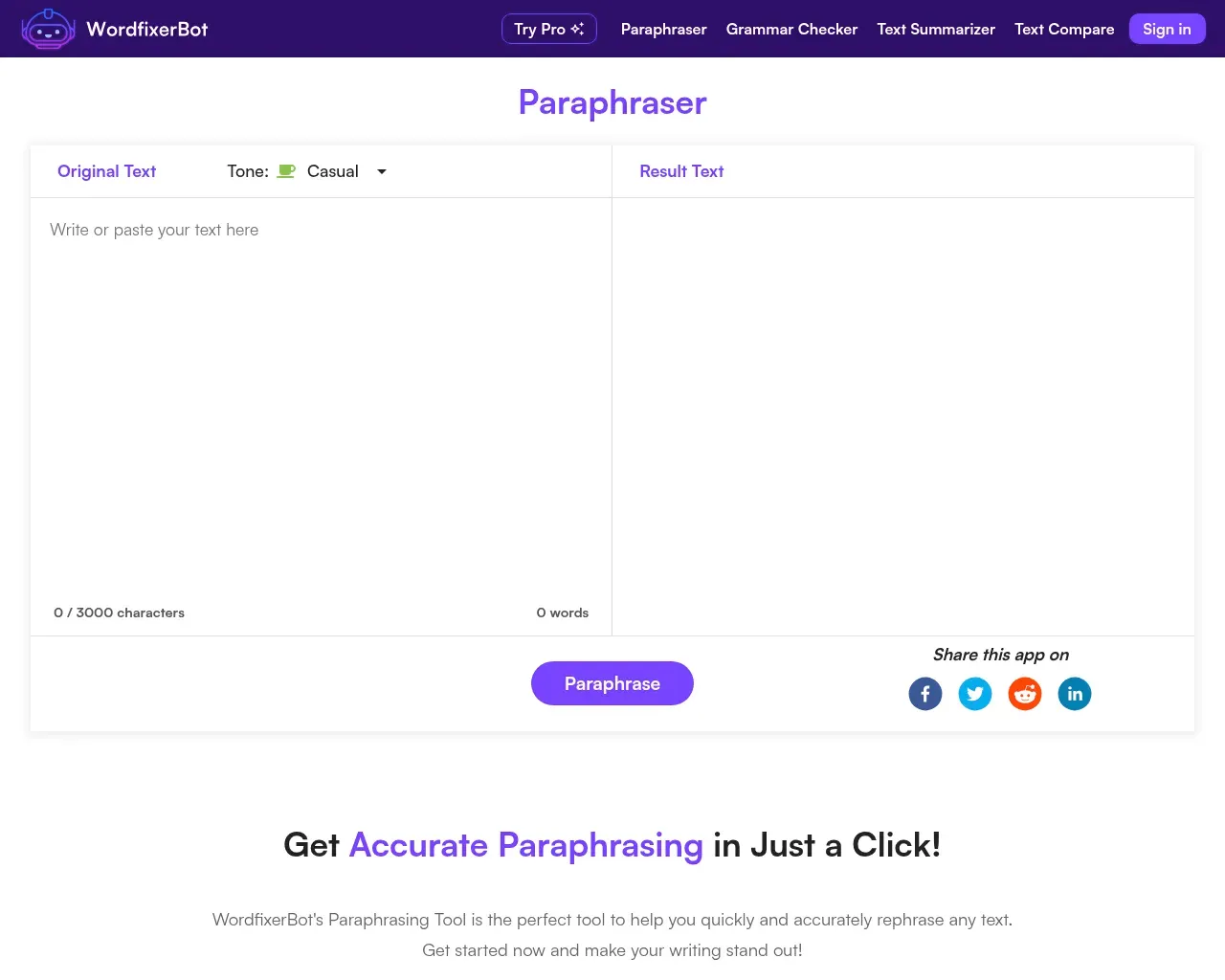
WordfixerBot is a browser tool with four tabs across the top: a paraphraser, a grammar checker, a text summarizer, and a text-compare view. Each one follows the same layout — paste text on the left, get the result on the right, copy or download it. There is no document upload, no browser extension, and no editor to work inside; you move text in and out by hand.
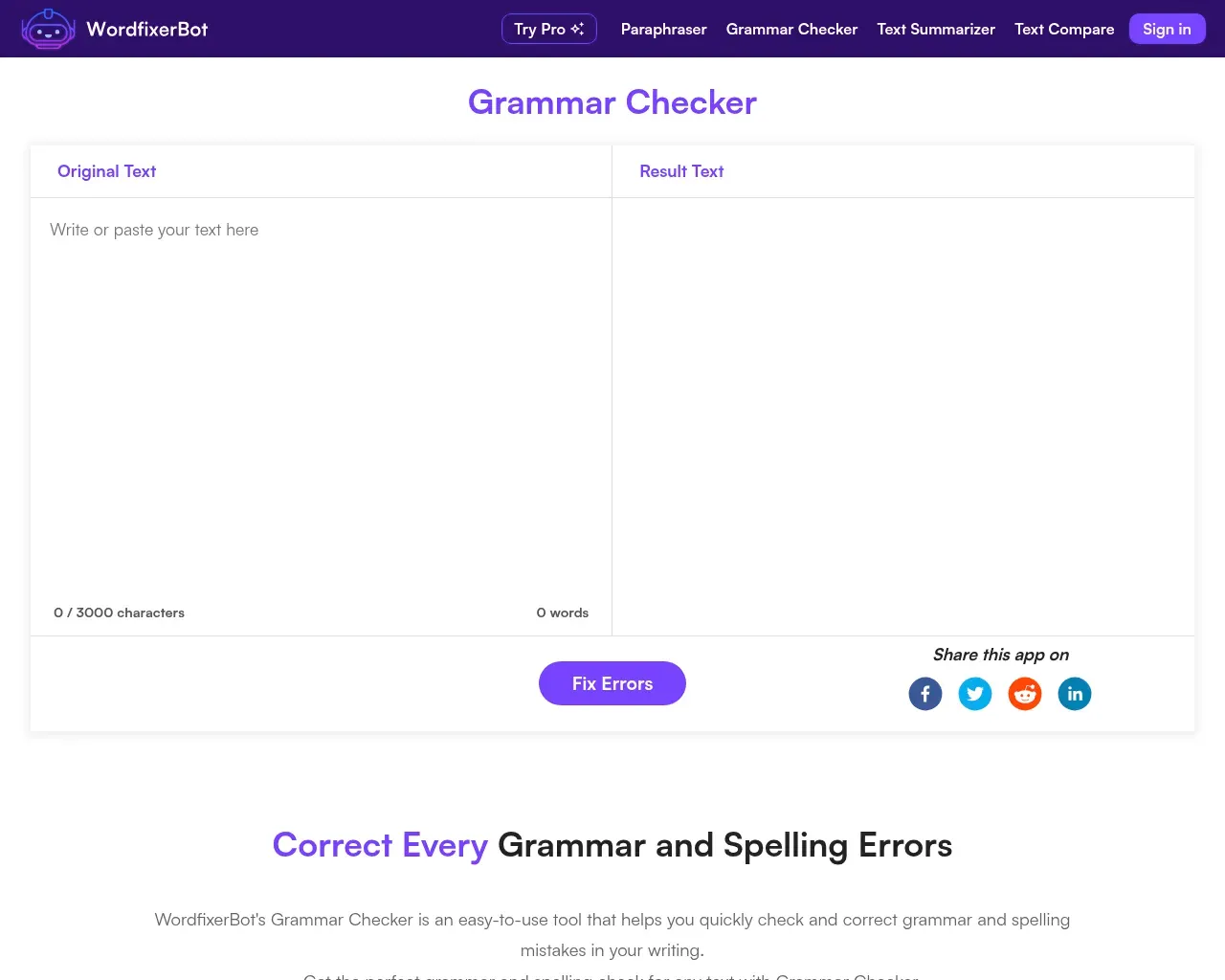
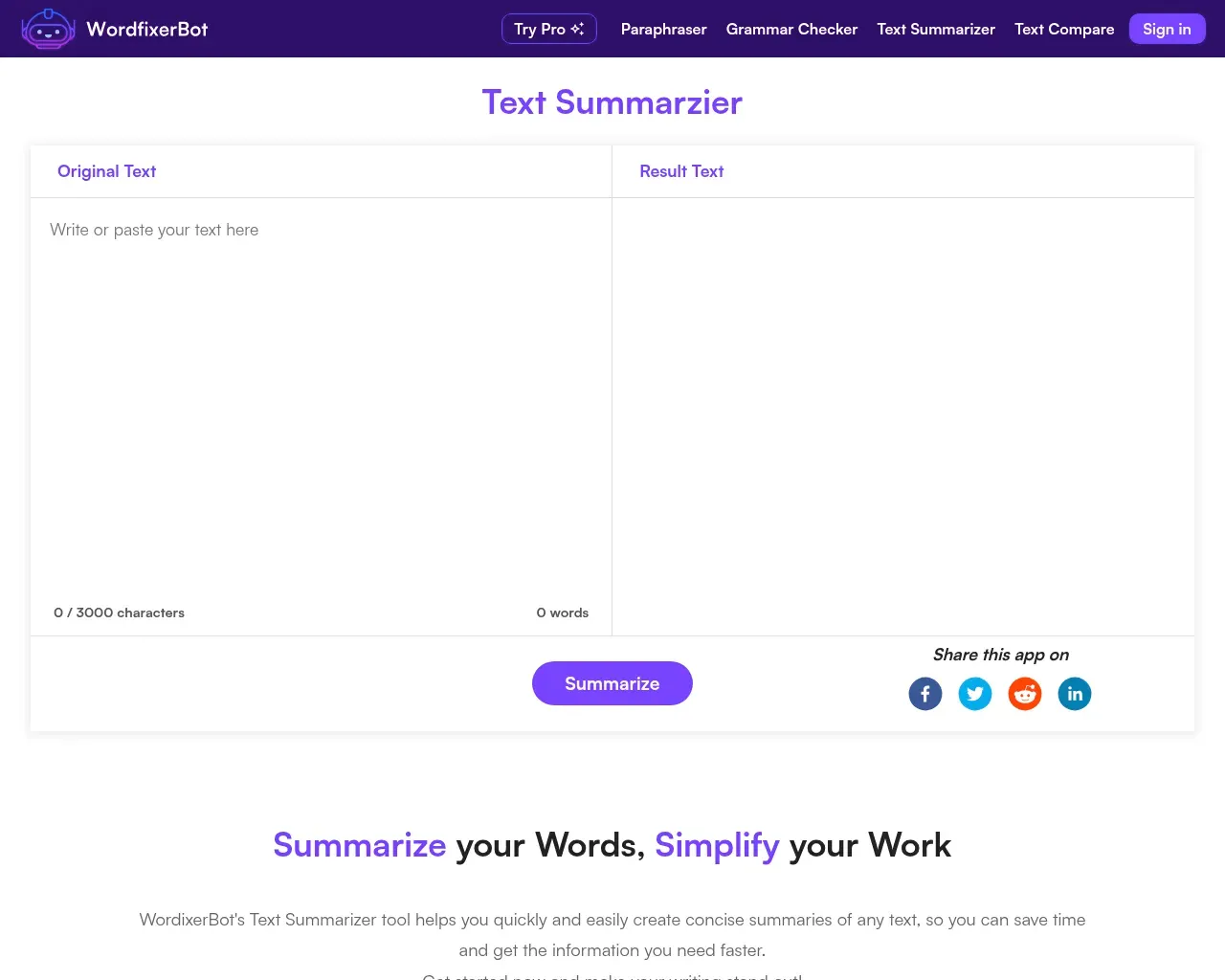
The paraphraser is the centerpiece, and its differentiator is the tone menu. You get ten options — casual, neutral, informal, formal, descriptive, creative, emotional, persuasive, reflective, and passionate — and each produces a genuinely different rewrite of the same input rather than a light word-swap. The grammar checker fixes spelling, punctuation, and grammar in a single pass, and the summarizer condenses a passage into a shorter paragraph that keeps the main point. All three run on the same model under the hood.
One practical constraint applies everywhere: each box caps input at 3,000 characters, roughly 500 words. That is fine for an email, an abstract, or a few paragraphs, but a long report has to be fed through in chunks.
Where it came from
WordfixerBot is not a venture-backed platform. It started as a solo project — the builder posted it to Hacker News in January 2023 as a "Show HN," describing it as an AI language tool built on GPT-3 that could paraphrase, grammar-check, and summarize. That origin shows in the product: it is lean, it does a few things, and it has stuck around and kept its copyright current into 2026, which is more than a lot of GPT-3-era side projects managed. The Internet Archive has crawled it steadily, so it is not a here-today site.
The flip side of that indie history is a thin independent track record. Beyond a low-traffic Show HN thread, most of what you find online is SEO directory listings rather than hands-on testing, so there is not much outside scrutiny to lean on. Treat the tool on its own merits rather than on a reputation it hasn't really accumulated.
Pricing
The free tier is genuinely usable but fenced in: it shows ads, limits you to 8,000 characters per day across the tools, and gives you only three of the ten tones. Pro removes the ads, lifts the daily character limit, and opens every tone for $7 a month billed monthly, with roughly 40% off if you pay annually. There is a seven-day Pro trial to test the full tone set before committing. At that price it undercuts the better-known paraphrasing suites, which is the main argument in its favor.
Who it fits
This is a tool for someone who rewrites short pieces often and cares how they sound: a marketer reworking ad copy for different audiences, a blogger softening a stiff draft, a non-native English speaker adjusting register, a support rep rephrasing canned replies. The tone control does real work for those jobs, and the price makes it easy to justify as a background utility.
It is a poor fit if you need to process long documents in one go, want the paraphraser to live inside your editor or CMS, or expect an all-in-one writing assistant with citations, plagiarism scoring, or team features. WordfixerBot deliberately isn't that, and pretending otherwise sets you up for disappointment.
What to keep in mind
A few honest caveats. The 3,000-character ceiling is the big one — anything book- or report-length becomes a copy-paste chore. Third-party reviews also note that the rewrites can flatten or misread genuinely complex, jargon-heavy passages, which matches how most AI paraphrasers behave; always read the output before you ship it rather than trusting it blind. And the tool markets itself to students for "avoiding plagiarism," which is worth a flag: rephrasing someone else's work to dodge a similarity checker is still an academic-integrity problem, and AI-rewritten text can trip AI-detection tools of its own. Use it to tighten your own writing, not to launder someone else's.
Overall it lands at 3/5: a competent, honestly cheap paraphraser with a genuinely useful tone selector and a narrow feature set, held back by the short input cap and a thin independent reputation. If tone-controlled rewriting of short passages is the specific thing you need, the free tier costs nothing to try and Pro is only $7 to find out whether it earns a place in your workflow.
Sources consulted
- WordfixerBot paraphraser (homepage) — tool layout, the ten tones, and the 3,000-character input cap
- WordfixerBot grammar checker — grammar/spelling/punctuation feature
- WordfixerBot text summarizer — summarizer behavior
- Show HN: Paraphrase text in any tone you want — origin, solo builder, GPT-3 basis, January 2023 launch
- WordfixerBot Review (10Web) — independent confirmation of tones, input limit, and noted limitations
- Internet Archive Wayback Machine — longevity and continued availability
Published on: October 27, 2026
Vous cherchez des alternatives à Wordfixerbot ? Voir toutes les alternatives à Wordfixerbot →
Have an AI tool of your own? Submit it below and get a free, in-depth product review article — just like this one.
Ajoutez votre outil IA en quelques secondes
Collez votre URL et nous préparerons la fiche. Vous relisez et modifiez chaque champ avant l'envoi.